Wednesday, 8 April 2020

A Few Questions (and Answers, I Hope) about Hydroxychloriquine


Apologies for what is likely to be a very, very dry post today. We are living in strange days; better ones are coming. The comments to follow are not political. They should not be seen as endorsing one political narrative versus another.

As Queen Elizabeth (channeling Vera Lynn circa 1939), we will meet again.

CAVEAT: I am not a medical doctor. I am an epidemiologist. It is (and has been, for 26 years) my day to day job to build, run, and abstract the results from disease models. I've run analytics of randomized clinical trials. I have helped prepare (and been a subject matter expert for questions from) the United States Food and Drug Administration (FDA).

But I am not a "scientist." I would not question the medical expertise of a doctor, whose job it is to make medical decisions.

Let me say, with no ambiguity or equivocation, that ANY decision (yes or no) people make about medical care absolutely should be made in consultation with a doctor.

In the past few days, there has been a lot of talk in the news and the popular press about the use of hydroxychloroquine (with or without azithromycin) to treat people suffering from infection with the SARS-CoV-2 virus. The US president has made many statements in support of it. People in the press have attacked his comments.

There is, I think, a lot of misinformation and misunderstanding about these medicines, why there is some belief that they help treat COVID-19 (the illness associated with SARS-CoV-2), the risks of the medications, and frankly, what is going on.

What is COVID-19? 

First, you hear "COVID-19," "coronavirus," and, to a lesser extent, "SARS-Cov-2" used interchangeably. They aren't.

COVID-19 is a terminology resulting from the abbreviation resulting from "coronavirus disease" (COVID), concatenated with 19, the year (2019) it was identified. This is a standard way that the World Health Organisation (whose job it is to come up with the nomenclature) assign.

Coronavirus is a heuristic to describe a family of viruses (of which this particular strain is included) that are so called due to their physical structure - a central structure that houses the RNA (essentially, viruses are primitive structures of genetic material) with spiky projections that make the virus look like a crown. The word "corona" means "crown," in the original Latin.

SARS-CoV-2 is an abbreviation for "SARS-CoV" (severe, acute respiratory syndrome, of the coronavirus type). It is a strongly believed to be a close genetic cousin of the virus that caused the outbreak of SARS in 2005, hence the "2." The name was implemented by the International Committee on the Taxonomy of Viruses.

So briefly, the virus is SARS-CoV-2; the illness it provokes is COVID-19. Think of it in parallel that HIV is the virus that causes people to get sick. AIDS was the disease that resulted. It's not a perfect metaphor (and thankfully, with highly effective treatment, these days, people with HIV infection can suppress infection and avoid AIDS).

What is hydroxychloroquine?

Hydroxychlorquine is a medication that was first approved for use by the FDA in 1955. It is in the family of antimalarial drugs called aminoquinolines. Its first use was for treating malaria; later, it was approved by FDA for use in treating Lupus (SLE), and rheumatoid arthritis. Its activity against infection was well-established in its early days against malaria. How, exactly, it works with RA is still not well understood.

Hydroxychloroquine is known under a brand name called "Plaquenil."

It is on the WHO List of Essential Medicines - a list of what the WHO describes as the safest and most effective medications that are essential to basic health for a health system. These represent well-established and basic for the key population health needs. There are currently approximately 500 medications on this list.

What is azithromycin?

Azithromycin is an antibiotic (medications that are used to kill bacterial infections) called a macrolide antibiotic. It has broad activity against a host of GRAM positive (and some, more serious GRAM negative) bacteria, and is widely used for inner ear infections, community acquired bacterial pneumonia, skin infections, and some respiratory and throat infections. It was first approved for use in the USA in 1988.

Azihtromycin is marketed under the brand name Zithromax; often, it is sold in seven or 10 days packages called "Z Pack."

Azithromycin is, like hydroxychoroquine, on the WHO list of essential medications.


Why has hydroxychloroquine been suggested for COVI-19?
There are several problems with Dr Raoult's study. The first is that the sample size is very small. Only 42 patients is too small a sample for any regulatory body to approve a medication for use.

The results are encouraging.

One of the controversies not said in the US media is that Dr Raoult is not without controversy. He is a highly respected infectious disease doctors. He was named one of the ten leading researchers in all of France by Nature magazine, and has published two thousand peer-reviewed manuscripts in his career. He was awarded, in 2010, with the Grand Prix de l'INSERM (Institut National de la Sante et de la Receherce Medicale), the French national institute for health research.

ALL medications have adverse events. When FDA approve drugs, it is implicitly understood that there are risks. When medicines are approved, FDA (and other regulators) are asked to balance the risk/benefit calculus - is the benefit that the medication greater than the risk associated?

Frequent complaints on the news are about how the use of hydroxychloroqine as an intervention represents bad, or at the least incomplete, science. Dr Anthony Fauci, who, with Dr Deborah Birx, are the medical experts informing our government's response to the outbreak of SARS-CoV-2. Dr Fauci is one of the leading experts in the country on infectious disease. He earned his bona fides over the years working in HIV disease, as did Dr Birx. His opinion absolutely must be respected.

Medications are "approved" for use by regulators - in the US, by the FDA. When they are approved, there is a very detailed "label," and more in what is called a package insert - the little paper in six point Courier type in the bottle - that describe the indication (the disease its use is "approved" for), side effects observed by more than 1% of patients in the trial, the clinical trial data, dosing, and other details.

COVID-19 is a very serious problem. As of this writing, 400,000 Americans have been diagnosed. 13,000 have lost their lives.


A small, observational study was conducted by the French infectious disease expert called Didier Raoult at his hospital in Marseille, France (Institut Hospitalo-Universitaire, or IHU) in which he treated 42 patients who had been admitted to his hospital with COVID-19, at various severity of disease. 26 of the patients received hydroxychloroqine. 16 received 'standard of care,' which is to say, palliative care. Six of the 26 in the treatment arm had azihtromycin added to their treatment.

The results were published by Dr Raoult in the International Journal of Antimicrobial Agents in mid-March 2020.

Dr Raoult reported that 14/20 (70%) of the treatment arm were reported free of viral loads at six days following inclusion. In the control arm, just two had this outcome (12.5%).

This is a stark result, and is certainly, from the perspective of statistics, an encouraging number.


So, what is the controversy?

Second, the study was not a 'randomised control trial' (RCT). This is the gold-standard for the research and approval of medications in the US (FDA), the EU (European Medicines Agency, or EMA), Canada (Health Canada), and most other industrialised nations on earth. It involves "double blinding" (enrolling patients into the trial into arms that neither the subject nor the investigator knows is which) that are broken only at the end to control for biases. Dr Raoult's study was "open label" (subjects and doctors knew who was in the treatment arm, and who was in the control arm), and it was observational (meaning that there was no attempt, through randomisation, to allocate patients into the two arms to balance things like underlying health, age, and other factors that can bias results).

Third (and in my view an under-reported problem) is that the study was not an intent to treat (or modified intent to tread) analysis. Dr Raoult reported that 14/20 patients (and 6/6 of those on both hydroxychloroquine AND azithromycin) recovered. In fact, there were six patients lost to follow up, and not included in the calculations. Three of these in fact died (of their infection, not side effects). Three others did not complete treatment. So the results reported (70% efficacy) represent a sort of survivor bias. In fact, 14/26 (54%) recovered. That's much less exciting than the numbers broadcast.

The study in effect was very small, uncontrolled, and had design issues. People are right to be sceptical of these results.


Who is Dr Raoult

A significant part of the backstory that frequently remains unsaid in the US media is that Dr Raoult is not without controversy. He is a highly respected infectious disease doctors. He was named one of the ten leading researchers in all of France by Nature magazine, and has published two thousand peer-reviewed manuscripts in his career. He was awarded, in 2010, with the Grand Prix de l'INSERM (Institut National de la Sante et de la Receherce Medicale), the French national institute for health research.

He is, in short, an acclaimed doctor and researcher.

But he is idiosyncratic. In 2013, he ventured outside his lane and questioned climate change, which drew widespread ire and scorn.


What role is there in the arguments about safety?

Both hydroxychloroquine and azithromycin are among the most prescribed medications in the world. If you are over the age of five, it is almost certain that you have taken azithromycin at some point. Of course it has risks - the most significant, perhaps, is that it causes QT prolongation - a heart condition that can result in irregular heartbeat. This is a real, but rare risk.

It is not zero.

The reality is, most of the "side effects" of the treatment are things like nausea, rash, and headache. These are the types of common 'adverse events' reported in most clinical trials. Anecdotally, of the trials I have run analyses on, nausea, headache, diarrhoea, and rash have in every case been the most common events reported.


What about the 'science?'

But people, I think, are either misunderstanding what Dr Fauci is saying, or they are distorting it.

He is a scientist as well as a doctor. His comments reflect that the only way, really, to establish the efficacy of a treatment right now is via RCTs. Randomisation is simply the best way to mitigate sampling and other biases. Using control arms are the best way to establish placebo effects.

In a perfect world, of course we would conduct multiple RCTs. And I suspect that we will. Many are right now going on, and the results will be in.

The problem is, we simply do not have the luxury of time.

I am old enough to remember life before the advent of effective HIV therapies (in fact, not that long ago). 25 years ago, when antiretroviral therapies (ARV) had not been discovered, the criticisms of FDA among others were that they were too slow to react and were obstructing treatments.

HIV activists were, at the time, highly critical of Dr Fauci for just this reason.

Dr Fauci's is right to be conservative. It is part of his job to question whether this approach will work.

But people need to listen to what he is actually saying rather than what they think he is.

Basically, the treatments have side effects, but they have been in use for decades, and are on the whole, pretty safe. They don't have no risk, but the risks are well-known. What we don't know is the actual efficacy, which the RCTs will establish.

Thus, in deciding whether or not to treat, patients should consult their doctors; medical expertise should decide.

In short, talk with your doctor.

Both hydroxychloroqine and azithromycin require a doctor's prescription. You cannot walk into Safeway and pick it up as if it were aspirin.

What does it mean for a drug to be "approved?" What is off-label use?


Medications are not "approved." They are approved for specific diseases. Adalimumab (Humira), for example, is "approved" for rheumatoid arthritis, psoriasis, ulcerative colitis, and a few other autoimmune disorders.

Doctors can - and frequently do - prescribe medications for disease not specifically indicated in the label. This is called "off label use."

The laws of the US presume that the best person to decide care for a patient is his or her doctor - a medical expert who knows the specifics of the patient before him or her - and is best positioned to understand the nuances, risks, and benefits to make the best medical decision.

This is, again, why it is critical for patients to talk to - and listen to - the opinions of their doctors.

Right now, you cannot get access to hydroxychloroquine - whether for an approved use (Lupus) or off-label (COVID-19) without your doctor.

Bottom Line


The reality is, those numbers are going to end up being much higher.

I don't know that hydroxychloroquine (with or without azithromycin) is effective. The initial evidence is encouraging, but it remains to be seen if this will be borne out in larger studies.

I do know that both have some risks, but those risks are pretty small. The risk of death from SARS-CoV-2 is many orders of magnitude higher.

We hear, every day, about ventilators. And it's true that they are essential. Without them, virtually all of those who require invasive ventilation would die.

But they are not a cure. Data right now indicate that, of those going in ventilators, mortality is 30-50%.

I worked, 10 years ago, in Phase II (dose-ranging) studies for a novel treatment of Lupus. One of the comparators we used was Plaquenil. Safety for Plaquenil was something we evaluated versus our treatment. But it was not the driving factor. Not close.

If I were to test positive for the virus, I personally would not immediately turn to this unproven therapy. But if I were to be put in the hospital, I would seriously talk to my doctor about it. And I would absolutely listen to what the doctor said.

The claims by the president that "you have nothing to lose" by trying hydroxychoroquibe are false.

But given that we have nothing else in the armamentarium right now means that I would think long and hard about the novel treatments before I required a ventilator.

Tuesday, 31 March 2020

Just Do It

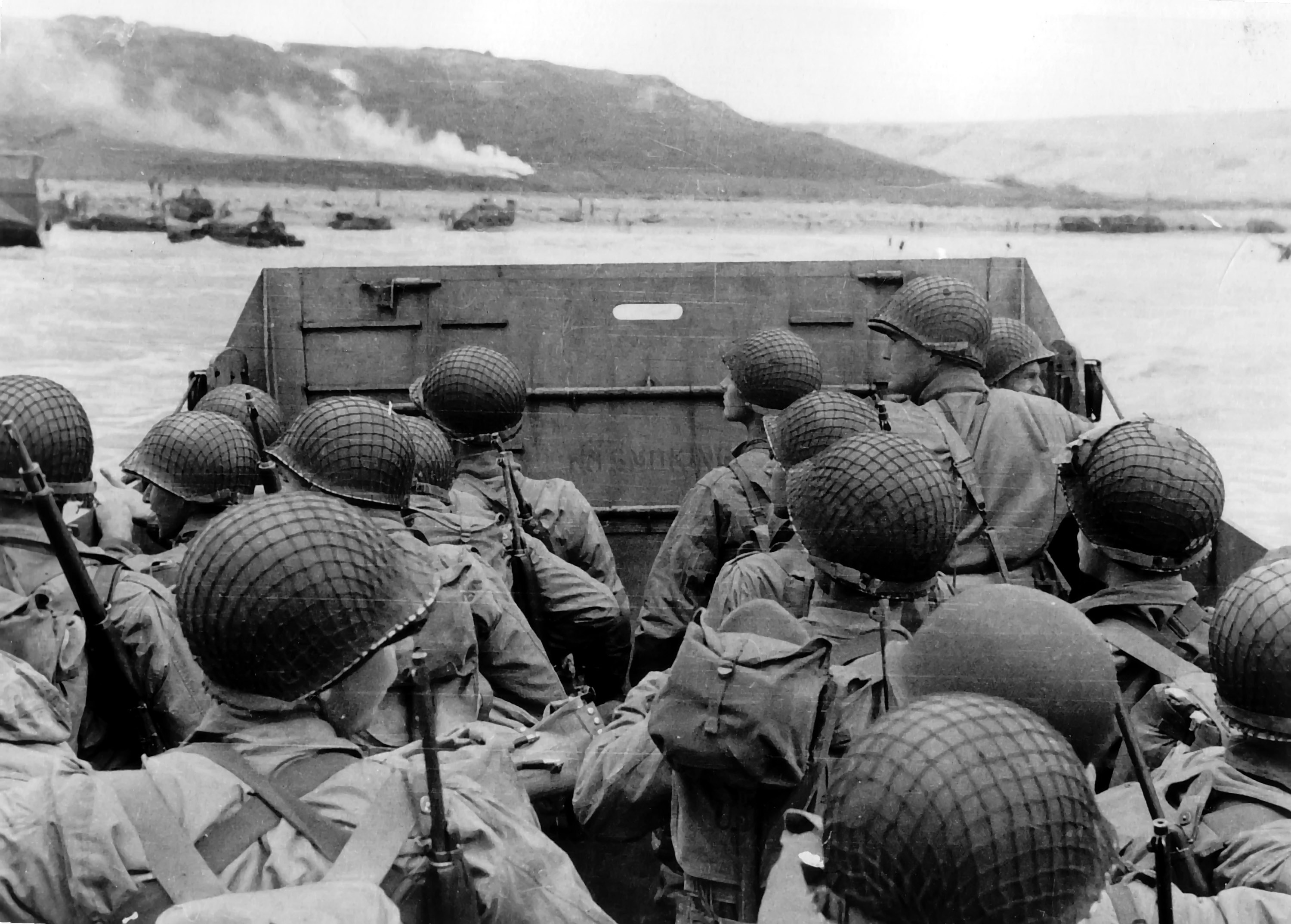
American troops approaching Omaha Beach on Normandy Beach, D-Day ...


Seventy six years ago, in the early hours of an early spring morning, young men from the various allied nations loaded themselves into a series of sequentially numbered metal delivery vessels off the southern coast of England. The ask of them was not complex, but it was difficult.

The potential future of the world depended in no small part in their execution of that ask.

It was simple, but it was not easy. Many knew that they would not even make it to the dry land. But they went.

When asked, they responded.

As a people, no-one in my generation, or those above or below us, has seen a moment quite like that.

Our moment is here.

There is another enemy, but it doesn't wear spit-shined boots. It does not confront us with Panzers or Messerchmitts or Junkers. It is not led by an evil man with bent symbols and a toothbrush moustache.

As of this moment, according to data being tracked here by the Johns Hopkins University, more than three quarters of a million people in the world have contracted the SARS-CoV-2 virus (COVID-19). In the US, we now have 164,000 confirmed cases.

Both numbers are likely an order of magnitude wrong at this point.

We've all seen the images from Italy. Many have seen the devastating numbers in Spain.

Six years ago, during the last viral outbreak (Ebola, at the time), I wrote this about the treats our ancient enemies (viruses and bacteria) present:

There has been a number of movies and books with doomsday stories.  In order of decreasing likelihood, the list includes asteroids crashing into the earth.  Widespread terrorist attacks,  nuclear war.  zombie apocalypse.  The first is a virtual certainty given sufficient time; the last is, despite an actual epidemiological simulation run at a reputable university in Canada, not ever going to happen outside the imagination of George A. Romero or Rick Grimes.  I am not particularly concerned about any of these.  But one thing I do actually have on my fear radar is a viral or bacteriological plague.  

In short, we are overdue - WAY overdue - for a thinning of the herd, so to speak.  The last really great plague was the so-called Spanish Influenza of the early 20th century.  What? No.  SARS does not count.  In 1918, the flu infected nearly a half billion people, killing around 20% of them.  100 million dead is a lot of people just on its face.  But considering that the world population then was only about two billion, the Spanish Influenza killed around one out of every 20 people on earth.

  • Stay home.
  • Wash your hands.
  • Avoid unnecessary travel.
This is not a drill.

SARS-CoV-2 is not likely to be the Spanish flu (and we should be on our hands and knees being thankful for this); but we need to take this seriously.

I repeat - if the epidemiology from 1918 plays out here today, more than one hundred million people around the world are going to die in the next 18 months.

This does not need to be our future.

We are not merely ships tossed on a tumultuous sea of fate and fortune.

Here in California, our governor ordered a state-wide "shelter in place" more than two weeks ago. He made it clear why this was so. And he reminds us, daily, that our future is in our hands.

Like the soldiers who hit the beaches of Normandy in 1944, we have been called. The ask of us, like them, is not complex.

We aren't being asked to load into troop transports pre-dawn. We are not asked to face enemy fire. We are not asked to storm dug-in positions on a beach in a faraway land.

We are asked essentially to do nothing.

And unlike those soldiers, if we follow orders, most of us are going to come out unharmed.

Our moment. Our choice. Our future.

Here is a simple breakdown of the course of disease, from initial infection to resolution.


For most of us, SARS-CoV-2 represents a fairly mild problem. 85 per cent of us fall into the top two cohorts. Most who are infected will have no (30%) or mild to moderate (55%) symptoms.

A small number (10%) will have severe symptoms, and will require hospitalisation.

Fewer still will have critical symptoms.

ALL of those who are infected will have a period where we are contagious. Even those who have no symptoms at all will, for about three weeks, be able to infect other people.

Critically, those in the 5 and 10 per cent cohorts.

And here is the rub. Of those who land in the critical cohort, current data are that fully half will die. In the severe cohort, estimates are that 15% (one in about six) are also going to die.

These two skew heavily into groups who are older (over 60) and/or those who have other underlying conditions. Asthma. Diabetes. Immuno-compromise.

Many people are discovering that they have "underlying conditions" after they are diagnosed with COVID-19.

But you are going to know someone who does.

By these estimates, crudely, if half the critical cohort (5% of the population) and 1/6 of the severe cohort (10%) are at risk of death, that's about four per cent of the population.

SOMEONE you care about is in that group.

Let me put that another way.

Think of twenty people that you know. Your mother. Your uncle. Your sister. Your daughter. A teacher you're fond of from when you were young.

If this model holds true, one of them is not going to be alive in a year if you don't stay home.

Maybe you're young. Maybe you're healthy. Chances are pretty good that you're not going to get terribly sick.


Do you have someone in your life that you want to nominate to be taken away by this? I don't.

The movie does not have to end this way. There is no need to panic; there is absolutely a need to act.

Stay home. Wash your hands. Avoid unnecessary travel.

Our moment. Our choice. Our future.

Please stay home.

Thursday, 13 February 2020

Like Clockwork

Image result for images clockwork


Today is one that's been on the calendar for a long time. In truth, since calendars were made of course, but from my own personal calendar, since 2000.

One of the advantages of being born in a zero year (I was born in 1970) is that the maths for the milestone years are a bit easier.

As a result, in the year 2000, I turned 30 years old. While the rest of the world was exhaling from the fact that we achieved the year without the computers simultaneously exploding and taking the developed world with them, I woke that day 20 years ago to the idea that I was finally, officially, a bona fide adult.

I've written a couple of times on the topic, but I clearly remember that birthday. My mother was visiting me in my home (in those days) in San Jose, California. The day began with some showers, but the sun came out. We spent lunch at Valley Fair Mall (now "Westfield Shoppingtown") where we grabbed a quick meal and a tiffany lamp for the house. On the way home, we stopped at the San Jose Municipal Rose Garden (which was one of my favourite spots in the city) before returning for dinner. Even at 30, it was a nice treat to have my mother prepare my favourite meal for a birthday.

I remember thinking that 30 was a milestone because I know longer thought of myself (or referred to my friends as) a "kid." All the trappings of adulthood of course existed already - real job, dog, house and mortgage. I had done my taxes already several times. I had a retirement fund. But now, there was no going back.

After all, 30 was the age when people in the 1970s cult film "Logan's Run" faced the final curtain.

But I also thought of the reality that at some point, I was actually going to be 40. And then 50. 40 came and went a decade ago.

50 arrived today.

Those who know me are already aware that my hobby is my 1952 MG. It's not "modern" in any way - 54 BHp engine, no power steering, no top. All its workings are mechanical.

I got the car for my 40th birthday, and from time to time, I am in the garage working on this or that 'thing' that decides in its uniquely British way that it just no longer wants to work properly.

The car was already 18 years old when I was born.

In the past decade, certain parts have just...worn out.

About 8 years ago, one of the carburettors developed a hairline crack, so it had to be replaced. It took a while, but I found a spare in Oxfordshire, England - ironically just a few miles from Abingdon, where the car was made. The factory was closed in 1980 or so, and now, a Starbuck's is where the cars used to roll off of the assembly line.

A carburettor is a device that used to exist in cars that more or less functions the way that your lungs do. Gasoline - the life's blood of an internal combustion engine - is mixed with air before being sucked into the ignition chamber, where the two are combined with a spark to drive the piston, and then, the car itself. If the carbs leak air, or are out of balance, your car will gasp in much the same way that you will if your lungs aren't working.

Two years ago, the starter's solenoid needed replacement. That was an easier "find" - an OEM still manufactures Lucas knock-offs online. A week later, the old one was out and the new, in. Back on the road.

In time, I've also replaced the dynamo, an oil line, and an odometer cable.

A 70 year old car has 70 year old parts that fail. But those parts can be replaced. So it will remain on the road as long as I have the interest in keeping it going (and the physical ability to do so). At some point, I hope that my son (now 14) will be interested in it, and I can give it to him. When he was six or so years old, he "helped" me replace the broken carb.

A human being is in one sense, a collection of parts. Some can be replaced easily, some not so easily. One of other off-time activities is running. 11 years ago, I wrote a brief blurb about it here.

In 1998, I was able to run 2000 km in a year. At the time, I could pretty easily keep a seven minute per mile pace. Pushing it was 40 minutes for a 10km (about 6.30 per mile).

At 40, I could keep a seven minute per mile pace, but it was not easy.

Age and wear and tear slow you down.

Last year (2019), I was able to log about 500 miles total And my goal is now eight minutes per mile. I get the occasional leg injury (pain in the heel of my foot, a strained gastrocnemius). These injuries take much longer to recover than they did. A tweak used to put me on the shelf for a week, maybe two. This past fall, leg tightness meant reduced activity for two months.

Unlike the car, I cannot go out and get a new lung, or replace a leg. Joints can be replaced with titanium, but they honestly aren't the same.

I used to laugh when my father would fall asleep in our green armchair in the living room after dinner. Last night, I was sitting on our sofa and briefly nodded off. Dad was 53 when he died, so he never was really an old man, even though I thought of him as one for most of our shared time.

Today, I'm fifty years old. And despite the fact that my own parts don't work as well as they used to, I am ok with it.


Wednesday, 22 January 2020

For Though Your Dreams May Toss and Turn You Now

Today is the 21st of January. For most of the world, one of 365 days (or in this Leap Year, 366) in the calendar. Another page on and another off.

However, for my family, today is my father's birthday. 

Dad's been gone for 26 years as of this coming July. More than half of my life. My own birthday is up on just over three weeks. This is a big one for me, but mainly because people think in base 10 (I suppose because, per Tom Lehrer, for those of us not missing two fingers...)

Many years ago, I thought my father was a big man. That he was the strongest person in the world. I thought he knew just about everything. We used to watch "Jeopardy!" on television every night after dinner, and I was amazed at how many of the questions he could get right. 

As I got bigger, I found out, one by one, that of course, none of these things was true. Dad was six feet tall and 155 pounds on a good day - hardly the biggest man in the world. More than once, as I got older, I could lift and do things that he couldn't. And there were times when, Jimmy Stewart to the side, I went to dad for an answer and even between the two of us, we could not find it. 

I have my own son who once looked at me in the same way. I was the big person who knew the answers to everything. Now, my own son is an inch taller than I am (he's 14, so he caught and passed me; I never reached my father's height). Years ago, he started asking questions I could not answer.

But while my father was not the biggest man in the world, and he did not have all the answers, he always remained the most important man in my life.

When I was young, I thought dad was an old man, which I suppose all kids do. He lost his battle to cancer in 1994. He was three years older then than I am right now. 

Dad never got to be an old man.

With the passing of time, I've found, as everyone does, that with each year - with each day - I have fewer and fewer plans and more and more memories. 

I think about dad often. Today, he would have been 79.

Happy birthday dad. I miss you a lot. 

Wednesday, 27 February 2019

Scars Are Souvenirs You Never Lose


No one ever takes a photograph of something they want to forget

Over dinner last night, I was having a conversation with my wife about a family friend. The friend, not unlike us (and you, I suspect) is fond of posting images on social media. The pictures show smiling faces, fun in the sun. A nice meal. A fantastic sunset.

People are smiling. Always smiling.

Many people today are talking as well about the scene of Academy Award-nominated actor Bradley Cooper exchanging a silent but loving look with "Lady Ga Ga", his co-star from the recent movie remake of A Star Is Born. Of course, Cooper and "Ga Ga" are professional actors, and they are paid to feign emotion. And quite skilful at it.

I remarked to my wife, people on Facebook, Instagram, and other social media project a certain idealized image of the life that they wish that they had.

This is not to say that they are not happy. It does not mean the emotion in the photos is false. But images online capture the soft light that shines into our lives. What is missing from our digital footprints is the shadows that fall on us all.

How are our actual lives stacked up against the way we want the world to see them?

Several years ago, there was a film released called One Hour Photo. For those who came of age in the era of digital photography, in the olden days (like, pre-2005), people took pictures using cameras with actual film in them. The rolls were taken to drug stores or to speciality photo printing shops to be printed. You dropped the roll of film and a couple of days later, went to retrieve the prints.

For an additional fee, you could get them back, as the title indicated, in one hour - a rush job.

I think most of the PhotoMats of my youth are long gone.

In an odd, against-type casting, Robin Williams played a character named Sy Parrish, who worked developing other people’s pictures. The movie opens with a soliloquy by Parrish:
Family photos depict smiling faces... births, weddings, holidays, children's birthday parties. People take pictures of the happy moments in their lives. Someone looking through our photo album would conclude that we had led a joyous, leisurely existence free of tragedy. No one ever takes a photograph of something they want to forget.
I liked the movie, though it comes to rather an unhappy and surprising end. But this observation has stayed with me since then.

“No one ever takes a photograph of something they want to forget.”

Therein lies your answer. No one is as happy as they appear in their on-line world.

That is the ugly truth of life.

Thursday, 14 February 2019

Another Year

Today is the 13th of February, which for those who know me, means that the odometer today clicks another digit over. Any one year is not significantly different from the last, but after a few revolutions, the chassis has picked up more than a few miles.

This year (49) is not a mile-stone year by any stretch. 49 is not even a prime number, so it's just another footnote in the stats almanac and not "black ink" as baseball writer Bill James liked to say.

It's today a rainy, stormy day here in San Francisco (speaking of 49ers). It reminds me a bit of my 30th birthday, which (incredibly) is now nearly two decades ago.

I turned 30 in the year 2000, which made it especially auspicious. Remember the Y2K scare? How silly we all felt when really, nothing happened?

That February, like this one, saw a lot of rain. The Bay Area is close to a desert in terms of annual rainfall, but we do get between 15 and 20 inches of rain in a year. But that rainfall is packed into a couple of months of the winter. For eight or so months per year, we typically do not even get a cloud in the sky, fog excepted.

I remember how wet it was in 2000. I remember more than that that my mother was visiting me. At the time, I was living in San Jose, California, in a sub-division called "Naglee Park." For my 30th birthday, I took the day off. My mother and I spent the middle part of the day getting lunch and then at the Municipal Rose Garden, just west of downtown. The Rose Garden is a beautiful park in central San Jose, with crushed gravel parkways, some sculptures and topiaries, and of course, rows and rows of roses.

It's the sort of place you might expect in a European city more than the self-described "Capital of Silicon Valley."

It was rather a stormy week (much like today), and in fact, it began to sprinkle. So we went to the Valley Fair shopping centre nearby for some shelter. My mother got me a Tiffany glass mission-style table lamp as a Christmas present before we headed home.

For dinner, my mother prepared my favourite meal - a recipe of oven barbecued pork spare ribs. She and I - and my dog Rowan - shared a birthday dinner.

I'm soon heading home from work, and that same menu is on for tonight. I'll share it with my wife and son. My dog Eiffel will get a bone if he behaves as well.

I still have that Tiffany lamp; it's on the dresser in my bedroom. I think about my 30th birthday when I see it each night.


x

Tuesday, 22 January 2019

A Close Shave

Image result for cartoonstraight razor


A lot of noise the past few days about a pretty quotidien item. The Gilette corporation last week unveiled an ad campaign that sought to ride along with the zeitgeist of the US. 

Essentially, playing on the old tag line that the company's razor's were "the best a man can get," the piece opens with a series of men looking into the mirror, and asking if this really is the best we can do.

What follows is approximately two minutes of images of bullying, caddish and demeaning behaviour towards women, and a host of other less than stellar examples.


The spot has drawn a lot of criticism for its suggestion of what constitutes "toxic masculinity," much of it from people whom I would typically consider fellow travellers.

Up-front, I want to say that I find the term "toxic masculinity" equal parts trite, cliched, and false. There is nothing specifically "masculine" about bullying, as anyone who has seen the way girls emotionally torture one another as adolescents. And the same ad that points to cartoonish laughs of an old sit-com where the boss pinches the bottom of his secretary does not go on to talk at all about the staple in sit-coms of dad being basically a useless fool who does not know not to put ice cream in the microwave.

Both of these are outdated tropes that lazy Hollywood writers used in lieu of creativity for decades. 

But setting aside the politics of the terminology, I have to say that what actually is in the ads is remarkably uncontroversial, isn't it? Who would argue that we can - and should - be better?

And what they are really showing here (again, cliches to the side) is bullying and how we facilitate it. Not "men," but all of us as a society. The image of kid, perceived by his peers to be weak,  targeted and chased by a wolfpack. 

I've written before here and here about what I have seen, both as a kid and a parent. I hate bullying. I find it, among the pantheon of vices, perhaps the most despicable.

The Chinese have an expression, å¼±è‚‰å¼·é£Ÿ. It means, the weak are meat, the strong eat.

I believe now as I did then, that we live in a society that likes to pretend that it is more refined than it really is. We believe that, if some bad guy tries to break into our house, the cops will get him. Or that white collar crooks who game the system can be constrained by ever more “regulation.” For all of our rules and our therapists and our technological wonders, we are not so removed from what we have always been - human beings are tribal, violent creatures who over millennia have evolved skills to kill or be killed.

We live in a world of predators and prey. Kids can sense this.
The ad shows in each situation that small eyes watch and see. They observe how we act. What we are, they become.

It's politically expedient today to talk in silly buzzwords about toxic masculinity and privilege. 
But ultimately, what is being said is that we can do better. I don't have any problem with that.

We must do better.


Tuesday, 8 January 2019

New Year New Look

2018 is now officially in the books. The holidays are over. We've tossed out the final page of the old calendar, and now have 12 fresh, new pages to confront us.

I am not one for resolutions; at this point, I have come to a sort of detente with time. Each year is, despite my best efforts, likely to be very similar to the one that just concluded, and ultimately, time is going to win anyways.

One thing that has changed - on the final day of the year, I went to have a new prescription for my glasses made. My last visit to the optometrist was in the end of 2016, so it was time. Like time, I am fighting a gradually losing battle with my vision, and thus, the glasses I got in December of 2016 are no longer up to the task. I could no longer read my monitor at work.

Worse still, my vision has now got to the point where I simply am unable to read anything in less than 20 point type unless I hold the thing an arm's length away. This does not work in restaurants (two weeks ago, I ordered a pizza on-line using my phone, and even with the help of my 13 year old to read what the options were, wound up with a mushroom and onion rather than a pepperoni pizza).

I now sleep with my eyeglasses on the table next to the bed in case I get a call or message overnight.

The exam went OK. I got my new prescription. Once again, I can see more or less clearly as I type these words.

Joy of joy, the doctor informed me that I have just the slightest onset of cataracts in both eyes.

It's really nothing she said. Hardly even there. Barely noticeable.

But it partially explains how my vision is now markedly worse than it was just two years ago, especially in dim light.

Cataracts.

Huh.

This is the first, real incidence of an old man ailment that I've experienced, and I'm not sure what to make of it.

Ultimately, I know that they will need to be dealt with. Not in the next couple of years, but ultimately.

Of course, I know that ultimately, we all face a grimmer future than cataract surgery. As Keynes pointed out, in the long run, we're all dead.

But cataracts? I didn't see that coming. Not even with my new glasses.

Happy new year.


Friday, 5 October 2018

You'll Never Get a Better Chance


Like the rest of the country, and a chunk of the rest of the world it seems, I've been following the goings-on in Washington with the nomination of Judge Brett Kavanaugh to the US Supreme Court.

I have my own feelings about the nomination, the allegations of sexual assault against him, whose telling the truth, how the vote should go down.

This is not about that.

Recently, President Trump made a speech in which he said
It is a very scary time for young men in America, where you can be guilty of something you may not be guilty of.
He's referring specifically to the as yet unsubstantiated charges against Judge Kavanaugh, but also more broadly of the accusations flying in the "#MeToo" movement of women (and some men as well) coming out with disturbing stories of sexual harassment and assault.

Again, I do not know if the allegations against Judge Kavanaugh are true, partly true, or made up of whole cloth. The FBI are looking into the situation, and though not tasked with deciding truth and falseness, will issue a report on what they find.

I was asked recently what I thought of President Trump's comments. Is it really a "scary time for young men in America?"

I am no longer a young man, but I am the parent of one, and my time being one is not so distant so as to be forgotten.

Now, while I did not vote for Donald Trump, I was not upset that he was elected over Hillary Clinton. I think that Trump is a terrible choice for president; he's crude, impetuous, seems ignorant of many basic elements of governing. He makes statements that are damaging to his own cause.

But had I been forced to choose between the Trump and Clinton, I would have opted for his (at the time presumed, but now to a degree demonstrated) incompetence vs. her demonstrated competence at making the wrong decisions.

I think Trump has been about what I would have expected, bumbling from mistake to mistake, and saying some pretty laughably dumb things along the way. But still, I'm glad that Hillary Clinton (and worse, the actual powers behind the throne) have been again kept from the levers power.

In addition, Brett Kavanaugh is, with a few exceptions, the sort of judge I would want on the court. The (in my opinion, ridiculous) decisions like using the commerce clause to justify federal government intrusion into decidedly non commercial activities, upholding the ACA as a ‘tax’ when the authors themselves explicitly argued that it wasn’t, the justification of affirmative action with a wink at the 14th amendment because “it is likely only to be necessary for a little longer.”

Finally, the timing of the release of the accusations by Senator Feinstein, and the partisan way that the Democrats have used it not as a means to get to the truth, but as a cudgel that I suspect is more to try to prevent the court from tilting too far from how they want it and less about the truth or justice for Professor Ford. I think that (Professor Ford aside) what we are seeing is pretty much unadulterated political theatre.

So, the all of the elements of the situation make me inclined to to lean towards support of Kavanaugh. Under other circumstances, I would be a strong supporter of his nomination, in fact.

BUT.

What I think of President Trump's claim - that it is a 'scary time' for young men is this:

It’s rubbish. I think that it should be pointed out in the most direct words for the wrong-headed and hyperbolic cant that it is.

It’s true that, as of now, there is no solid, irrefutable proof that Professor Ford is telling the truth. It’s true that false accusations can - and do - happen. While I personally have not been accused of something falsely (in each case where someone has said I was guilty, I was as guilty as hell), I know people who have. I understand that it can happen. It has happened. It surely will happen again.

But I am roughly the same age as Judge Kavanaugh. When I was in high school, I was not in the “cool” crowd, so the sorts of parties alleged, and the sorts of behaviours described were outside of my social orbit. I never - not one single time - was invited to a house party. I never - not once- attended one.

The only "house parties" I attended were playing cards in friends' basements.

But the events that have been described, I can say with absolutely no fear of mis-remembering or exaggeration, strike me as 100 per cent believable.

If you were in high school or college as I was in the 1980s, I suspect that you know that this is true.

These parties were well known in my school - which was about as close to a middle-of-the-road American public high school as you could imagine. They were well-known even to people way down the social pecking order like me. The events were described in lurid detail. Think about the sorts of people along the “Breakfast Club” spectrum who were your classmates - the cool kids, the sport-os, the geeks, the guys who wore jeans jackets and smoked out behind the library. Can you think of one or two guys who, if it were suggested, had gotten a girl drunk and had sex with her, you would say, “Yes. I believe it?” You know damned well that you can.

So can I.

Over the weeks, I’ve seen a lot written about how, in the mid 80s. What was considered “sexual assault” is way different from what it is today. The Atlantic magazine recently published an article that drove the point home to me as clearly as it could possibly be done. It was a piece about movies of the period - focusing on "Sixteen Candles" as its device - and how getting a girl drunk and taking advantage of her was not only not sexual assault, it was funny.

There is a scene towards the end where "The Geek" gets put into a Rolls Royce with the prom queen, who is too drunk to even know who he (and likely, she) is. They end up having sex, though neither really knows for sure. It's a plot device in a classic "coming of age" movie.

A month or so ago, I got into a debate with a friend on Facebook, and stated that the movie Animal House (1978) was one that I thought (and mostly still think) is hilarious. But there are parts that have just not aged well at all. One shows a fraternity brother in his room with a girl (who turns out, in the end, to be 13) who get drunk, and then listening to a debate between an angel and a devil on his shoulder about whether to have sex with the girl. The devil actually at one point says “You’ll never get a better chance.”

The audiences laughed at the scene. I laughed at it as a 16 year old.

Just today in a discussion, someone pointed out that "Pinto" ended up listening to his angel rather than his devil, and waits until later - and in fact, when his date tells him that he "won't need" beer to "get lucky."

Great; but in the very end of the film, Bluto kidnaps Mandy Pepperidge, tosses her into a car, and drives off victorious. He is identified as "Senator Blutarsky."

The claim that it’s a scary time for young men in America just does not square with this reality.

Not at all.

“You’ll never get a better chance.”

That is really all I need to think about when considering this statement, sorry.

Are there cases where young men get falsely accused? Of course there are. People get falsely accused of crimes, which is regrettable. Is it difficult to respond to an accusation of sexual assault where it is quite literally just your word and hers. That is undeniable. The recent debacle at the University of Virginia, where a coed made up, out of whole cloth, a phony story about getting raped in a fraternity, as it turns out as part of a “catfishing” scheme is disgusting, and people who make false accusations must be held to account.

I have a 13 year old son, who is close to entering the stage of his life where dating and perhaps sexual politics become part of the ambient noise. I am not sure what I would do if he were accused falsely.

It does happen. But it is not the norm. Let’s look at the reality. Accusations of sex crimes are false in about 5% of cases according to a recent study published in the Journal of Forensic Psychology. 5 per cent is not zero, but it's not high. And it certainly is not enough to make for "scary times."

Put another way, in 1978, the mayor of San Francisco (George Moscone) and a supervisor (Harvey Milk) were killed by a disgruntled former supervisor (Dan White). It made national headlines. Was that a “scary time” to be a mayor? No. It was an outlier where one angry man with a grudge killed two other politicians. It was not “the norm.”

Should my 13 year old be "scared?" I don't think so.

Look - it is, in my opinion, incumbent on him as a “young man” to behave with decency and respect towards men and women. Part of the responsibility falls on his mother and me to show him through our own role-playing what a healthy relationship looks like, that pressuring a girl into sex or getting her drunk so that he will “never have a better chance” is just out of the question.

He should not do these things - not because he is afraid of being accused of them, but because they are wrong.

I am now 48 years old. I’ve done things in my life that I really wish I hadn’t. But I do not fear that there will be someone who will, for financial or political or personal or indeed, no reason at all, accuse me. I suspect that the only young men who do fear this are those who should be afraid.

“You’ll never get a better chance.”

No. It’s not a scary time for young men. It really isn’t.


Thursday, 30 August 2018

Take Me Out to the Ball Game


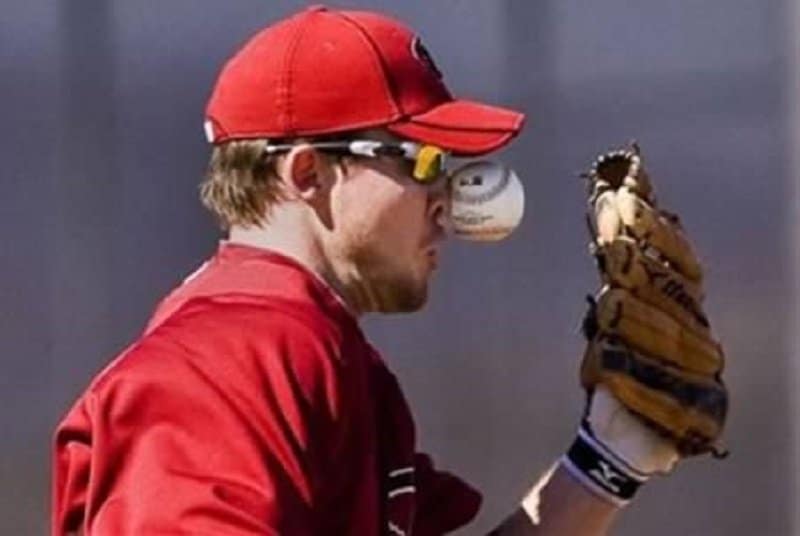
Image result for baseball images faceplant

As summer transitions to fall, the days are shorter and shorter (and soon, we will be returning home from work in the dark), and the kids settle back into their school routine, the inevitable real end of the seasons approaches.

Saturday is the first of September. For baseball fans, September is a key point where the pretenders (which is most of the teams) bring their minor league prospects up for the traditional cup of coffee, and the "wait til next year" chorus begins warming up.

I am a Toronto Blue Jays fan, and 2018 has been another pretty dismal season. The team has played poorly, and worse still, has a roster stocked with an admixture of non-prospects, nobodies, and has-beens. 

No; that's not really fair, their "has beens" largely never really were much to begin with (Kendrys Morales?) Losing with a roster of young players at least offers some level of excitement. One (or more) of those guys at some point might be a star on a contending team.

The 2018 Blue Jays are losing with the oldest roster in the major leagues.
x


So, they are going to lose more than 90 games this year; and in all likelihood, the team will actually be worse in 2019.

In March, I thought that the team would possibly be historically awful - the Blue Jays have not lost 100 games in a season in 40 years. A "hot" start (they won 13 of their first 19 games, and were briefly in first before reality came around) made that unlikely. 

So the Blue Jays will have to settle for an unremarkably poor season - the sort that Toronto fans have come to expect over the past quarter century.

But 2018 has provided something interesting that has, as far as I know, gone un-noticed.

While this Toronto team is going to go down as yet another forgettable bunch, the Baltimore Orioles of 2018 actually can reach a level of futility for the ages.


There are, of course, many ways to answer the question. Worst, cumulatively? The most losses in a single season? Winning percentage? Who finished the furthest down in the standings.

When talking about terrible teams, you almost have start with the Philadelphia Phillies.

The Phillies were the first team in all of professional sport to amass 10,000 losses, which they accomplished in 2007. But to be fair, they’ve been in the National League continuously since 1876, so of course, they have had a lot more opportunity to lose than, say, the New York Mets (born in 1962).

They Phillies have been joined by the Cubs, Pirates, and and Braves in the 10,000 loss club.

The St Louis Browns from 1901–1953 racked up a record of 3462–4554 (.431), which translates to a 162 game average of 92 losses per season. The Browns lost more than 90 games on average every season they existed. In their 53 years in St Louis, they appeared in the World Series exactly once (in 1944 during the War when man of the top players were off in the Army). Only 3 other times did they finish less than 10 games out.

The Browns were an epically horrible team - and it's worth noting, the predecessors to the Baltimore Orioles, having moved in 1953 from St Louis to Baltimore.

The Kansas City Athletics were in KC for only 13 forgettable seasons, and in that time produced no winning seasons. The “best” record they produced (1958) saw the team win 73 and lose 81 games. They still finished 19 games out of first. Four of their 13 seasons saw the team lose more than 100 games (and for half of those, the season was only 154 games long).

In terms of single-seasons, there are of course the 1962 Mets (40–120) and 2003 Detroit Tigers (43–119) have posted the most losses in a single season.

By percentage, the 1916 Philadelphia As (36–117, .235) and 1935 Boston Braves (38–115, .248) are the only two teams to lose more than 3/4 of their games in a season.

By games behind, the 1909 Braves (65), 1939 Browns (64) and 1932 Red Sox (64) have finished the  furthest out.

So what then, does that mean for the Baltimore Orioles?

In 2018, as of today (29 August) the Baltimore Orioles stand at 39–94 (.293), and 52 games behind the Red Sox. At this pace, the Orioles will finish with a record of 47–115.

47 wins and 115 losses is a terrible record, but does not pose serious risk to the records of the Mets (total losses) or Athletics (worst winning percentage). 

Projecting their position in the standings, however, over 162 games, the Orioles are on pace to end the year 63 games out of first place. They are in a position to challenge that record.

With a little bit of luck, the Baltimore Orioles in 2018 can set the major league record for most games out of first place in the modern era.

The 2018 Orioles are within reach of a season of historical importance. Baltimore fans, it seems, do have something to be cheering for.