Wednesday, 10 September 2014

Things Are Seldom What They Seem


I am interested in a lot of things.  I am amused by still others.  I am paid for work that I do at a small intersection of the two.

Quickly, I work in a large, global pharmaceutical company, in a department called "Health Economics and Outcomes Research (HEOR)."  It's a long title, but can (relatively) simply be put as a function whose job it is to try to quantify economically and socially the benefits (and risks) of health care interventions.

My work often touches on traditional randomised controlled trials (RCTs), which are the bread-and-butter of pharmaceutical R&D.  These are the classic studies where subjects are enrolled into trials with a proportion randomly assigned to treatment/intervention A, and a proportion randomly assigned to treatment/intervention B.  The subjects are then followed, and the clinical outcomes assessed.

The endpoints of these trials might be survival - for example, lung cancer patients treated with two competing oncological agents.  They might be heart attacks - for example, patients with CHF being treated with beta-blockers or ARBs.  

But traditional RCTs are really just part of the process by which new treatments are assessed.  Once their relative safety and efficacy are estimated, the question moves on to the practicalities of effectiveness versus efficacy (i.e. do the treatments perform in actual life-use versus strictly enrolled and controlled trials, where patients may or may not adhere, etc.), or whether the added benefit is the best allocation of resources.  

The world we live in is one of constrained resources and unlimited need, so it is natural, even perhaps laudatory, for those who must pay to consider the optimal allocation of the public purse. Is it the best use of one million euros to treat 100 cancer patients or 10,000 diabetics?

These are the sorts of questions I work with each day.  

My academic training is in mathematics and mathematical modelling; though the term "Economics" is embedded explicitly in my title, I am most assuredly not an economist, and my formal economic training is actually a single course in college.  But I am very skilled at constructing models and at evaluating the ways in which they are deployed.  And over more than two decades, I've achieved a certain level of comfort dealing with economics.

Which brings me, rather circuitously, to the current argument raging right now in France, where I live.  The data for the second trimestre (the second quarter) for the French economy have been published, and they are awful.  A record number of French are looking for jobs.  The growth in PIB (produit intérieur brut), or GDP is 0.0% and projected at best to be 0.2% or so for the remainder of 2014.  The president, François Hollande, is polling currently at 13% - a performance so poor that it is historic, and his regime are flailing about, reshuffling ministers trying to 'fix' the situation.

The US economy, while not running terrifically, is looking practically robust, if not bullish, by comparison.  Our neighbours in the UK and Germany are also doing substantially better.

So the question is asked, naturally, "Why is France performing so poorly compared to other OECD nations?"

The answers offered are manifold, but the motivations are a bit wide of the mark.

The local morning news, Direct Matin had an essay this morning talking about the possibility that there is Un Climat de Japon-isation in France, alluding of course to the more-than-a-decades-long doldrums in Japan.  (Apologies; the article is in French)  A period of low or no-growth, competitive disadvantage, and perhaps even financial deflation.  Prices indeed in France, while still high, have remained flat and in some cases in fact are falling.

If one digs into the article, some odd things emerge.

Recall, in the late 1980s and early 1990s, there was in the States a real fear that Japan would over-take the US economically.  These fears were driven by the erosion of the US auto industry, the rise of the tech companies (e.g., Sony), and the swagger of the Japanese, including some pretty ostentatious acquisitions - Pebble Beach Golf Course, for example.  The US responded with an array of activities, including a weak dollar policy, and the threat abated.

La réponse américaine s’était ordonnée autour d’une vraie guerre commerciale, dont l’arme principale avait été une politique du dollar faible, face à un yen dont on annonçait qu’il pourrait un jour menacer la suprématie du dollar. Le résultat a été l’entrée du Japon dans cette longue période de stagnation dont il ne parvient pas à sortir, malgré une politique plus nationaliste mais qui ne prend pas le chemin du succès. 
Certes, des facteurs strictement japonais ont joué : faiblesse du système financier, recul de la capacité d’innovation… Mais les Etats-Unis ont utilisé toutes leurs armes commerciales et monétaires pour se redonner un avantage vis-à-vis du Japon.

[The American response was a true commercial war, but the primary weapon was a weak dollar policy, which was threatened with replacement versus the yen as the primary world currency.  The result was that Japan entered into a long period of stagnation that it could not escape; despite a strong nationalist policy, Japan could not find its way.
Certainly, other factors played a role: a weak financial sector, loss of innovation...but the US used all weapons, both monetary and commercial to reclaim its advantage over Japan]

The author goes on to compare the situations of Japan circa 1995 and France currently.  I find that he misses the mark on a number of counts.  First, whilst the US did in fact deploy monetary policies - and these have side effects that are not 100 per cent positive (inflating the dollar, inter alias, makes all imports expensive, including commodities and raw materials like oil) - the major structural problem that the Japanese faced was not that they could not export goods to the US, but rather, that their own growth was largely fuelled by the sort of speculation in real estate that made internal consumption slow down.  Much of the "wealth" created in Japan was illusory; apartments bid up to ridiculous levels.  This phenomenon was to an extent played out in the US during the first decade of the 21st century.  

The Japanese acted by, among other things, encouraging borrowing with low, zero, or in some cases, negative interest rates.  None of it worked, as Japanese consumers simply did not respond in sufficient numbers.  

A modern economy is largely driven by consumer spending, China to the side.  

In France, the leadership are looking at various means to 'fix' the economy, including tax abatements/inducements to companies to encourage hiring.  Manuel Valls, the current primer minister, is pushing President Hollande's showcase piece of legislation, called le pacte de responsabilité. which is a set of inducements to large employers accompanied by various promises of hiring, etc.  Both the patrons of the enterprises and the core supporters of Hollande's socialst government, including the unions, have balked.

Various other fixes are proposed, including weakening the Euro, providing subsidies to 'incubators' in Paris to re-create the start of culture of the US's Silicon Valley, to adopting more pro-business policies similar to Germany's or the UK's.

A signficant problem, both with the Direct Matin analysis and the machinations of Hollande's PS colleagues is an ultimately mis-guided faith in economics and economic policies as a science.  Economics is often called the "dismal science," but I wonder if economics is indeed, a science at all.  Modern economics and modern economists are very good at creating models to describe how the economy "works."  There are now "star" economists such as Paul Krugman, Josh Barro, Joseph Stiglitz, and the current flavour of the month, Thomas Picketty.  There are also their historical forebears JM Keynes, Friedrich von Hayek, and Milton Friedman.

All of these men are, I am assured, very smart.  Their models precisely described, in often highly mathematical terms, the functioning of macroeconomics.


One "Model" for Explaining Macroeconomics

The statistician George Box once famously commented that "all models are wrong, but some models are useful."  The debates continue of whether Keynes or Friedman were "right" in their thinking, and largely because economics itself does not readily lend itself to controlled experiments in the way that physics or even medicine do.  

In an anecdote, when I was in the PhD programme at Stanford some decades ago, a classmate was researching the use of stochastic models to describe the movement of the stock market.  His models could be finely-tuned to describe what had happened.  But they were hopeless at predicting with any sort of accuracy what would happen, or even could be reasonably be validated using standard, hold-out analyses and the like.

The markets move just too erratically.  Too irrationally.

One of my passions is mathematics; I have a particular interest in abstract algebra and topology.  One of the reasons is that maths tends to be very clean; elegant even, in its beauty.  But mathematics are a sort of artificial construct, a system set up to describe the world.  I studied some model theory, but I am not terribly well-versed in the philosophy of mathematics (I've read portions of Principia Mathematica, the canonical work of Whitehead and Russell, but confess, it gets over my head quickly).  

As I understand, all of maths derives essentially from one form or another of model and measure theory.  One sets up a vocabulary (the terms to be used), a grammar (the rules by which they are put together and to function), and a mapping from the vocabulary to the "space" to be described.  From these, basic axioms are agreed to (or not), and then everything is true or is not true.  Goedel showed that not everything that is true can be proved, but for all intents and purposes, it's a closed set.  At least practically speaking.  There are not "exceptions."  There is not interpretation or competing sets of facts.

Measure theory is the basis of real (and complex) analysis, and from there, probability and statistics.  

Economics is not like that.  Once can create models, of course (see Box above), but one simply must deal with complexities and realities that cannot be modelled.  This leads to famous (infamous) scandals - the recent work of Piketty, Capital in the 21st Century, has a number of controverseys surrounding it about how his data were chosen and analysed.  

Even more generally, attempts to 'control' the economy are fraught with peril.  My nine year old, reading in a history magazine about Al Capone, asked me why the Great Depression occurred.  In fact, the Great Depression had manifold "causes," no one of which really explains it.  Similarly, attempts to right the economic ship, some proposed by the most brilliant economists at the time, failed.  Spectacularly at times.

Why?

The unhappy truth is that NO ONE REALLY CONTROLS THE ECONOMY.  Not François Hollande, or Manuel Valls, or Paul Krugman, or Barack Obama. It's an incredibly complex system, and frequently, attempts to explain or affect it fail to understand that the variables are inherently interconnected.  

In my work, I create a number of what are called "systems dynamics models," which is to say, you push down on lever A, and something happens to levers B, C, and D.  It's much like the child's game "Mousetrap" pictured above.  More often than not, how the levers interact is not known; in fact, the correlations frequently cannot be known.

And most uncomfortably of all, if pressed, most economists, if they are being honest, admit that a large portion of the economy is driven by consumer behaviour, which is inherently not rational.  Worse still, it's not predictable.  In large part, the Great Depression happened because people (in many cases, rightly) lost faith in the banks.  Bank panics are an incredibly corrosive event, far more important than what the marginal tax rates or policies on hiring and firing are.  If people lose faith in the economy, they stop buying.  If they stop buying, companies stop producing.  If companies stop producing, they stop hiring.  

Lather, rinse, repeat.

The French government think that they can fix the economy by pulling just the right strings.  They think that they can create a French Silicon Valley by making hipster lofts with slick coffee kiosks in an abandoned warehouse.  One could argue whether the current iteration of Silicon Valley is in fact innovative, but one thing is clear.  Silicon Valley exists as a result of decades of somewhat organic growth, timing, and serendipity.  It exists despite, not because of, the government.  

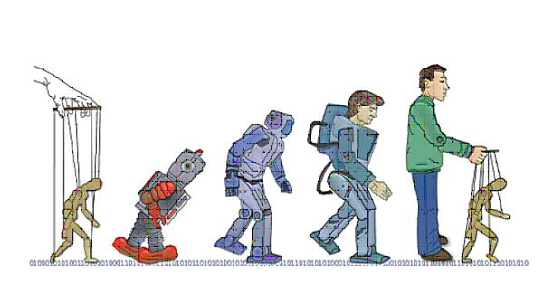
Our leaders benefit from creating the illusion that they are in control.  It's comforting to think that they can solve economic problems.  King Canute demonstrated the limit of the King's power when he tried to order the tidewaters of the Thames to stop advancing.

At some point, Paul Krugman's feet are going to get wet.


Tuesday, 9 September 2014

What's the Big Idea?


We spent our recent summer holidays in Maui, which given that I live in Paris, France, means a LONG flight.  Maui is twelve hours separated from France by time zone, and a few more hours than that separated by plane.  That of course leaves a lot of time to fill, which I accomplished by, in no particular order, sleeping, eating, and watching movies.  

I am now caught up, by the way, on Season Five of "The Walking Dead," which "n'est plus disponible en France."

Enjoyed "The Lego Movie" (recommended by my nine year old) very much as well.

One of the real revelations, however, was the television series "Silicon Valley."  It, like TWD, is not available in France unless one is willing to set up a somewhat clandestine VPN and then connect to somewhat more clandestine servers.

Quickly, the show is about the travails of a small group of young guys living, supposedly, in Palo Alto, California.  They live and work in an "incubator" run by a scruffy, obnoxious "angel" investor, played by T.J. Miller, who, it is implied, somewhat lucked into a fortune by creating a selling a company in the eponymous region.  "Silicon Valley" was created by Mike Judge, most famous for "Beavis and Butthead" and "King of the Hill," but who prior to these successes wrote the screenplay for the cult classic "Office Space." This film similarly parodies life in the tilt-up world.  

Having worked for many years in the Valley - seven of those in a proto-typical start-up - the show is nearly pitch-perfect for life in and out of the 'office.'  The socially awkward techies, the rapacious investors, the ridiculous business pitches.  I left the area several years ago, but if the show is to be believed, it seems that not much has changed.

I was thinking of "Silicon Valley" this week after I read a couple of articles.  One is an interview with Peter Thiel; Thiel is the founder of PayPal and a somewhat quixotic character in the Valley.  He made some noise a while back when he pledged to fund - called "20 Under 20" -  a handful of young adults who would agree to quit college and start companies.  His premise is that higher education in the US is something of a con game, where smart, ambitious young people are lured into large debt to obtain somewhat useless degrees and even more useless educations unnecessary for real success.  The programme caused a bit of a stir, with then Harvard president Lawrence Summers calling it "(t)he single most misdirected philanthropy in this decade."  Not sure the ultimate outcome of the situation, but given the way Summers's actions running the economy of the period ended up, my money is on Thiel.

In the article, Thiel bemoans the lack of real progress in the hard sciences over the past half century, especially in areas of medicine, energy research, transport, and other areas with acute need.  Thiel coined what has become called "the tech stagnation thesis," by which somewhat dubious "technological advances" are masking a real stagnation in actual advancement.  Twitter is the unfortunate target of much of Thiel's venom, and indeed, the tag line for his current VC firm is pretty direct:  

We’ve had enormous progress in the world of bits, but not as much in the world of atoms. We wanted flying cars, instead we got 140 characters.
A more succinct condemnation is beyond my abilities as a writer, but the point is obvious.  The more noise that is being made about advances, the less profound they are becoming.

Put simply, Silicon Valley seems to have run out of big ideas.

As Thiel sees it, there are serious, perhaps existential, problems confronting at the least the US economy. Everyone is aware of issues of inequality; most acknowledge the problems of climate change.  Our top brains are not focusing on any of these issues, instead looking for the next way to slickly package an "app" for the phone to amuse the masses.  Thiel is putting his money where his mouth is, funding a venture called "Breakout Labs" that support on 'hard' tech startups - barring specifically any social media, websites, or communication technologies.  

I'm guessing that "Yo Dot Com" is not on the list.

Oddly, the character on "Silicon Valley" based on Thiel - Peter Gordon - is a sort of strange, somewhat mystic idiot savant who stares at Burger King's menu for hours before taking a decision to invest in sesame seeds (the episode has to be seen to be appreciated).

Another article, shared on (ironically) Facebook by a friend addressed similar themes.  Entitled "The Unexotic Underclass," and written by an analyst at MIT, the piece takes a very scathing look at what is on offer out in the Silicon Valley these days.  She likens the rush to find the next hot "app" to the near total mis-allocation of top brains to Wall Street back in the 1990s, where brilliant minds were used to create ever-more exotic financial "products" of dubious value rather than to look for medical break-throughs, or address challenges in physics or chemistry.

(O)ne of the biggest inefficiencies plaguing  the startup scene right now (is) the flood of smart, ambitious young people desperate to be entrepreneurs; and the embarrassingly idea-starved landscape where too many smart people are chasing too many dumb ideas, because they have none of their own
CJ Nnaemeka, the author of the piece, goes on to state that 

(c)osmopolitan, well-educated young men and women in America’s big cities are rushing into startups and building for other cosmopolitan well-educated young men and women in big cities.  If you need to plan a trip, book a last minute hotel room , get your nails done, find a date, get laid, get an expert shave, hail a cab, buy clothing, borrow clothing, customize clothing, and share the photos instantly, you have Hipmunk, HotelTonight, Manicube, OKCupid, Grindr, Harry’s, Uber, StyleSeek, Rent the Runway, eshakti/Proper Cloth and Instagram respectively to help you. These companies are good, with solid brains behind them, good teams and good funding.
But there are only so many suit customisation, makeup sampling, music streaming, social eating, discount shopping, experience  curating companies that the market can bear.

It's a devastating analysis of what is really going on in Silicon Valley, and in my opinion, pretty spot-on.  The current tech world represents a tremendous mis-match of talent and vision.  Top minds from our top schools are working on churning out the next pointless, solipsistic apps to solve imaginary first-world problems.  Or, more to the point, rushing to cash in before the most recent bubble bursts.

The situation reached (almost) self-parody with the funding of Yo, a "company" whose product allows users to send the two-character message to their friends' phones.  The Forbes story sums it up pretty nicely in saying that 


The hallmark of a bubble about to burst is a heightening in mania right before it all hits the fan. Say, for example, investors driving through Silicon Valley throwing bags of money out of a car window and watching penniless entrepreneurs scramble for cash to fund their do-nothing app.

I suspect that there are not literally men driving around the Valley tossing bags of cash out the windows of their Teslas, but it's not far off, I would bet.  Smart men, such as Marc Andreesen (the founder of Netscape) defend the exuberance around Yo in somewhat aetherial terms that I admit I cannot follow.

I don't see it. 

I now work in medical research; the products are real.  The problems are difficult.  My company is, in terms of the Valley, a dinosaur, and its stock is not 'sexy.'  We are not likely to be the subject of a television show.  Not a flattering one at the least.  A company producing medical products is unlikely to make someone a millionaire (billionaire) overnight.

It seems a bit odd to say, but the more actual value a product has, the less perceived value it commands.

It's also to a degree ironic that much, if not most, of the action here takes place in California.  In days gone by, the Golden State was synonymous with Hollywood, another place where illusion is to a degree, reality.  In the canonical Hollywood movie "Sunset Boulevard," the main character, Norma Desmond, bemoans that she is still big, it's the pictures that got small.  

Silicon Valley used to be about technology.  Back in the day, that meant Robert Noyce and William Shockley and the IC.  Over time, the region was transmogrified to include less science and more software - Netscape and Google and Andreesen and Sergey Brin.  

Now, when one speaks of tech, one is generally speaking more about clever marketing and the repackaging of old ideas in slick, new formats.  Shockley, a Nobel laureate, is replaced by laughing boys who spend more time arguing about the importance of being seen at things like "Burning Man" than on developing tools.

Hollywood creates the illusion of romance, or adventure, or thrills.  We pay our money, but we know we are engaging in fantasy.

Silicon Valley these days is creating an illusion of progress - talk of "disruption" is common.  But the revolutions often are no more realistic than the idea that Brad Pitt is a special opps agent with a sideline in WHO anti-epidemic training.  

The problem as I see it is this.  Researching cancer treatments, or alternative fuels, or new polymers requires answering hard questions.  The problems are cut-out for you, the needs are real, and no amount of slick marketing can overcome them.  Creating "apps" is the opposite problem.  Here, the need itself needs to be manufactured, with the 'solution' often existing first.

In the 1960s, pitching one of the great triumphs of science, John F Kennedy defended the space programme saying, "we do these things not because they are easy, but because they are hard."

Can any honest person say that "YO" is solving a difficult problem?  -A- problem?

Thursday, 4 September 2014

Endless (End of) Summer


The Endless End of Summer


We walked together hand in hand
Crossed miles and miles of golden sand
But now, it's over and done.
Cause that was yesterday
And yesterday's gone.

The pop song "Yesterday's Gone" by the otherwise forgettable Chad and Jeremy - late entries to the 60's British Invasion - is about the end of a summer romance, and seems appropriate as we enter September.

 As I type these words, I am sitting in my office in Paris, with an eye out the window on a somewhat grey day.  We have just recently returned from our two week congés (summer holidays) in Maui.  Our son today starts his first day in CM1 (the French equivalent of grade four).  This year, he will be in a French language school (his CE2 was in an international school, with most instruction in English, so this school year will be a big change for him - and us).


Our Nine-Year-Old Petit Écolier
Preparing for a New School Year
Time really flies.

Not only did the summer seem to come and go in the wink of an eye - every summer I can remember from childhood fits this - but indeed, our little child is, well, not so little anymore.

Here is a photo of him a mere three years ago, as he was entering grade one.


(Back in the US, our son was a child model, and appeared on the cover of a Toys-R-Us flyer).  

Just two short years ago, on our last trip to Maui, our son was keen to make sand castles - it was his favourite thing amongst many.  We have taken his little plastic, purple sand pail and red shovel with us on all of our beach trips.  These tools have been to Maui (five times), Waikiki, Aruba, Barbados, the Canary Islands).  

On this trip, however, he was far more interested in body surfing in the waves, and only once asked to make sand castles.  

It's a small, but to me, noticeable change.  There is a famous passage in the First Letter of Saint-Paul to the Corinthians:


When I was a child, I spoke as a child, I understood as a child, I thought as a child: but when I became a man, I put away childish things

Now obviously, a nine-year-old child is not a man, but still; it makes me a bit sad to think of putting away the sand bucket and plastic shovel.  No; sad is probably a bit strong, but wistful, nonetheless.

Time was, when "we" made sand castles, it was mostly me making vaguely shaped piles of sand, and our son joyfully crushing them.  He progressed to helping make the piles, helping make the castle-shaped heaps, and finally, him making the castles mostly on his own.

Now, it seems, his sand castle days appear at an end.

We will return again to Maui in due time, and I suppose he then will not want to play in the sand at all; I suspect at some point, he will want to spend more time there with others his own age.

Ultimately, he will want to stop coming with us.

It's the natural way of things, of course, for your children to grow up.  Now, as the summer of 2014 ends, I find that I am especially grateful for this summer - perhaps the last such glorious time - where my little guy still wanted to hold hands with his mother and me as we walked on the sand into the setting sun. 

Thursday, 7 August 2014

Do Androids Dream of Electric Sheep?


A few weeks ago, a quite important case here in France was settled by the high court in Paris, regarding the "right" to die. Recall the case of Vincent Lambert, a man who for a decade following a terrible car accident has lain in a coma, kept alive by machines that feed him and assist his breathing.  The French parquet affirmed the wishes of his wife and half of his family in granting permission that life-sustaining functions be withdrawn. Within hours, the Cour Européenne des Droits de L'Homme (CEDH) - the European court of human rights - reversed the decision, ordering that Lambert remain on life-support, affirming the request of his mother and father, and the other half of his siblings.

A the time, I was struck by the terrible story, and have long wondered what it actually means to be human, a question I think about often.  Are we defined by our physical bodies?  By our memories and experiences?  Our emotions?  Our intellect?

Today, an article in Le Figaro provoked me from a different angle - rather than end of life, this case is the opposite.  

France, viewed from the outside, is a progressive country - liberal policies on leave and work.  Forward-thinking on the environment.  But in reality, it is a deeply conservative nation in many ways.  Though same-sex marriage has more or less been granted, and society in Paris is very open and accepting of gays, just beneath the surface, there remains a visceral, if minority, opposition.  

The topic du jour is connected to what in France is called GPA (gestation pour autrui) - surrogate motherhood.  Believe it or not, surrogacy is currently not legal in France.  Even more bizarrely, the French government refuses to recognise children born to parents who go abroad for surrogacy.  In late June, the CEDH decided that this was in conflict with basic human rights, and ordered France to recognise the children of French citizens who are born abroad through surrogacy.  The case involved twins born in California in 2001 to French parents, who have for more than a decade been trying to have their children granted legal citizenship in France.

This has been opposed by governments both left and right, including the current socialist president, François Hollande.

All of that may be ending, as Le Figaro reported this morning that the secretary for families and children, Laurence Rossignol in an open letter to the newspaper Liberation, declared that children born abroad by surrogacy "doivent bénéficier de la même sécurité juridique que les autres." (must have the same rights and protections as others).

The timing could not have been more stark, as the terrible case of twins born in Thaliand by surrogacy for an Australian couple has been making headlines.

In that case, one of the twins - a little boy called Gammy - was delivered with Down Syndrome, a heart problem, and quickly developed severe infections.  The little boy was apparently more or less abandoned in Thailand by the couple, who took with them the healthy twin sister.

It's an awful, awful story raising all sorts of questions.  Stories swirling around the circumstances change, but it's very difficult to look at any of the 'sides' and not be touched by the heartless way a helpless infant was treated more or less like a commodity.

Again, I ask - what is it to be human?

Alongside the story in Le Figaro is an essay by a French philosopher called Chantal del Sol, looking at the ethical questions surrounding surrogacy.  A defender of GPA called Pierre Berge commented:


Il n'y avait pas de différence entre louer ses bras pour travailler à l'usine ou louer son ventre pour faire un enfant.   
(There is no difference between renting your arms to work in a factory or renting your belly to make a child) 
It's a utilitarian argument, of course, along similar lines that we "own" our bodies and thus, can do as we wish.

But are we simply supermachines of a sort, or is there something more?  One need not venture onto the slippery rocks of religion to ask, what exactly is the difference between "renting" our bodies or other possessions?  Is there something more precious about life?  Human life?  

Del Sol responds that a view such as the utilitarian one ultimately debases motherhood and humanity itself.  A factory makes things, of course, but a human being is not a product.  I was touched by her words:


La maternité ne se résume pas à la fabrication d'un bébé dans un utérus inséminé par du sperme. Car un enfant n'est pas un produit, n'est pas un artifice, n'est pas un objet - mais une personne. La personne ne se fabrique pas, elle se procrée - autrement dit, il y a un mot spécifique, pour distinguer ce processus de celui engagé par le souffleur de verre ou le manufacturier.   
(Motherhood is not simply the making of a baby in utero through the act of insemination.  A child is not a product, or a thing; it is not an object, but rather, a person.  That is why we have a word - procreation - to distinguish birth from say, a glass-maker or a manufacturer.)
Ultimately, I see all around me the degradation of humanity.  Part of progress is the removal of obstacles that make life difficult.  We have washing machines to clean clothes, dishwashers to clean dishes.  We have winches to lift weights and cars to carry us. 

But not every change makes the world better.  Change and progress are not synonyms.

But there are things in life whose very struggle is part of life, and having a baby is one of them.  Being pregnant is difficult Giving birth is painful and it is messy, (NB: I am sure - though as a male I have no first-hand experience, I do have a child and was there before and during his birth).  Because of infertility or other issues, some people are not able to procreate in the "natural" way, and for them, surrogacy provides an alternative.

But to reduce the process to the mechanics (and economics) of "renting your body" to make a baby in the way you "rent your arms" to make products in a factory moves us that much closer to a future without humanity.

Children - whether born naturally or through surrogacy - are not products.  One cannot and should not simply send them back if there are problems in the process the way you would a shoe missing a lace.

People are not disposable, not yet.  And hopefully, the government in France today took a step closer to that recognition, even if Australia didn't.

Wednesday, 6 August 2014

Still Laffing After all These Years


Time for a bed-time story.  Is everybody sitting comfortably?  Good.

Before I begin, I have to warn you - tonight's story may frighten some of you.  It involves some pop economics, a bit of math (eek!), and maybe even a graph or two.  I would ask anyone who might get scared by any of these topics to get a glass of water and go off to bed.

(This is the moment in the "Hitler finds out that..." videos on YouTube where half the room walks into the corridor before the Fuehrer launches into a poorly-dubbed tirade.  Don't worry - this evening's story will not include a forced rant about some comical transgression about Stalin)

OK - let's begin.

In recent years, it has become almost accepted wisdom that the economies of most of the OECD countries are in a period of gradual to sharp decline for the common man.  Productivity has grown, but all the gains have gone to an increasingly small cadre of the well-connected.  In the US, this has coalesced around the famous "One Per Cent" meme that one can scarcely interact with media of any sort without seeing or hearing it, or its obverse "Ninety-Nine Per Cent" proxy for the guy on the street.

Always, the writer includes himself in the 99%, whether he is or he isn't. (Most famously, Hilary Clinton, eyeing another shot at becoming the US President, has gone on a bit of a pre-emptive tour describing how impoverished she and her husband, the former president Bill Clinton, were upon leaving the White House).  People with houses in Westchester County, NY and Georgetown are not 'middle class.'  

Few doubt that it's true that the middle-class in the US (and France, the UK, etc.) is facing unprecedented challenges.  Though official inflation is under control, things like housing costs, college tuition, and other talismans of the middle class lifestyle continue to grow.  A headline in the Sunday Times of London in fact indicated that, as house prices in London soar, it will be virtually impossible in a few years for anyone outside of the very wealthy to live in London (prices are up more than 10% over last year, and the average mortgage in the west of the city is now nearly $7500 per month).

The question of course, is not whether these trends exist, but rather, why they do.

The pat answer one gets from many is that the game is rigged by fat-cats and their puppets who set tax and corporate policies that tilt the field to their advantage.  And this may be.

But the ills and thus solutions from progressives are often exercises in through-the-looking-glass fantasies.  


It's All Ronald Reagan's Fault

Ronald Reagan for virtually all of his political life has been the Simon Bar Sinister of the left.  He emerged on the political scene as a vocal public supporter of Barry Goldwater (the godfather of the American conservative movement) in 1964, and later was the governor of California in the late 1960s and early 1970s.  That era was a turbulent time in California; the Watts riots shook Los Angeles - at the time the whitest large city in America - in 1965, and violent protests in Berkeley against, inter alia, the war in Vietnam, racialism, sexism, etc. helped shape the Golden State as it is now understood.  It's worth pointing out, for example, that in 1964, San Francisco had a Republican mayor, and the election that year of John Shelley was the first Democratic mayor of the city since 1910.  


It's virtually incomprehensible to imagine a Republican even pretending to the office these days.

As governor of California, Reagan put on a face of law-and-order leadership, at times being quite beligerent with the demonstrators in Berkeley.  At one point, tanks were actually deployed on Telegraph Avenue, making good on a promise he had made during the 1966 campaign to "clean up the mess in Berkeley."  Though Reagan was hardly a model of reactionary politics (he signed into law in 1967 one of the most liberal abortion laws in the country at the time), the left never really forgave him for his vocal dismissal of the protest movement, something that came to fruition many years later when they controlled the aparatus of the public media.

A common meme one sees today is that the decline in wages began in the 1980s "Decade of Greed."  But the truth is far more complex.

As this chart from economist Robert Murphy illustrates


real wages in fact peaked in 1973, and have been more or less flat since.  Murphy's plot shows inflation-adjusted wages versus productivity as measured in output per hour worked.  Wages rose in tandem with productivity until the early 1970s, were decoupled then, and have diverged sharply since.

The worst erosion of wages actually occurred in the late 1970s, under President Carter.  

The policies of Reagan in the 1980s came on to the scene well after the wages and productivity split, so as much as the left like to blame Reagan for everything wrong with the world that cannot otherwise be pinned on George W Bush, the data simply do not support the claim.


Tax Cuts Lead to Income Inequality by Impoverishing Government

This idea is more or less a corollary to the idea that the ills of the world are due to Ronald Reagan.  The so-called supply-side theory of economics is a frequent target, especially with respect to the enormous deficits that the US government runs.  One often reads or hears disparaging remarks about 'trickle down' economics - a term that, in point of fact, was never actually said by Reagan or any of his advisors.  It's become the left's equivalent of the "Al Gore invented the internet" apocrypha.

Simply put, the idea of supply-side economics is this: it's possible to cut taxes and at the same time increase government revenues if the tax cuts stimulate economic growth.  Reagan and his team sold his large tax cuts of the 1980s in part by offering that they would pay for themselves as productivity rises.  The basis of the idea came from a simple plot drawn by Arthur Laffer on a cocktail napkin, later known as the Laffer Curve.

It's a bit counter-intuitive, but only a bit. If one thinks more than two seconds, the principle makes perfect sense.  

A tiny thought-exercise.  If tax rates are set at 0%, the governemnt necessarily will collect no revenue.  This is a guaranteed outcome of the model.  If tax rates are set at 100%, one would expect the government to collect, if not nothing, very low tax revenues, as few people will be willing to work when they keep none of the fruits of their labour.  It won't be zero, of course, as even slaves - which is ostensibly what a person who is forced to turn over all of his wages to the government becomes - produce something.  But it won't be much.

So if one anchors at $0 (or near to it) government revnues at tax rates of 0 and 100 per cent, logic impels that there be a curve between the two that must rise, must flatten, and must fall.  With some empiric data and basic calculus one might ascertain approximately where on the curve the point of maximal revenue is, and there is plenty of room for argument that that number might be 20%, 50%, 75%.  But the basic idea of Laffer is water-tight.

If one looks at the data, Reagan (and Laffer) was right.  In real dollars, federal tax receipts rose from $1.37 trillion in FY 1981 (the final budget for which President Carter was responsible), to $1.64 trillion in FY 1990 (the final Reagan budget). In Truth, government revenues increased  Liberal economist Paul Krugman points out that, despite his reputation as a tax cutter, Reagan raised taxes as often as he cut them.  

Looking at another metric of same - tax revenues as a portion of the GDP - tax receipts were remarkably stable during Reagan's eight years in office, as indeed they have been in the post-war period, ranging between 16.9% (1984) and 18.6% (1982).

High Taxes Lead to Prosperity

Another saw one hears is a sort of weird (for progressives) nostalgia for the post-war period 1950-1980.  It was a time of high taxes (one frequently reads about how the top marginal rates of 90% co-incided with high wage expansion in the 1950s and 1960s, and arguments for Keynesians that high taxes and spending lead to growth.  The following table demonstrates top marginal rates in the US following World War I.


Looking at the data, it's true that once, top marginal rates were 90% during and following World War II through the Kennedy administration (JFK is consider by some the father of supply-side economic practice).  

Aside from the caveat that correlation is not causation, one does ask - IF taxes were high, just who was paying them?  As mentioned before, in FY 1951 (top rate 90%), tax receipts were 15.7% of GDP.  In 1959 (top marginal rate 70%), they were 16.4%.  Between 1953 and 1968, tax receipts were 18.2, 18.0, 16.1, 17.0, 17.2, 16.8, 15.7, 17.3, 17.2, 17.0, 17.2, 17.0, 16.4, 16.7, 17.8, and 17.0 per cent of GDP - a relatively stable range around 17%.

Simply put, the relative amount of real dollars being collected over the period, with tax rates ranging at four different levels, remained remarkably stable.  Spending (ranging in the 16-19% of GDP range) remained similarly stable.  It's not immediately obvious then, other than an implicit correlation argument, how higher marginal tax rates were influencing government tax collection or spending.

One simply must, then, accept that top marginal rates must have some sort of intrinsic, quasi-talismanic effect on inequality.  I'm not one given over to magical thinking, and long ago stopped believing in unicorns or the power of horseshoes, and thus am inclined to see this argument as little more than class envy, thinly disguised with a whiff of statistical seasoning.


Misplaced Nostalgia

The next frequent talking point one hears is about union power - i.e., the 1950s were a golden age of union organising, where management and workers had an implicit shared community bond.  If we could only get away from the current era where monocle and top hat wearing plutocrats snicker in an evil way as they stuff money into a burlap sack with a cartoonishly-large dollar sign on the outside run the world and back to the era where union good guys held sit-down strikes or Norma Raes led heroic fights to keep the boss in line, the US could go back to the way things were in 1955.

Simply put, such a simplistic world view ignores some basic realities.

The first problem is, the world economy is not a simple, univariate system.  Yes - incomes were growing more strongly and broadly in 1954 than they are in 2014; but beyond the simplistic analysis of tax rates and unions, there are myriad other variables at play.  Europe and Japan were rebuilding from the devastation of the war.  China was an isolationist, third-world country with no export economy.  US industry was largely unchallenged - all of that has changed under globalisation.  Strengthening unions will not undo the establishment of Japan and South Korea as serious competitors, nor will it roll back the growth of China.

Another problem is the rise of automation.  We are far (IMHO) from true artificial intelligence, but a machine capable of simulating actions will be good enough.  It's a new take on the old joke about not having to out-run a bear; machines just have to out-run you.  Or, to do it well enough that it becomes cost-effective for it to complete your job in your place.

As professional pessimist John Derbyshire wrote:

The assumption here is that like the buggy-whip makers you hear about -  like dirt farmers migrating to factory jobs, like the middle-class engineer of 1960 - the cube people of today will go do something else, creating a new middle class from some heretofore-despised category of drudges.
But… what? Which category of despised drudges will be the middle class of tomorrow? Do you have any ideas? I don’t. What comes after office work? What are we all going to do?
What is the next term in the series: farm, factory, office…? There isn`t one. 
The evolution of work has come to an end point, and the human race knows this in its bones. Actually in its reproductive organs: the farmer of 1800 had six or seven kids, the factory worker of 1900 three or four, the cube jockey of 2000 one or two. The superfluous humans of 2100, if there are any, will hold at zero. What would be the point of doing otherwise?
The djinn is out of the bottle with respect to machines; no amount of union-era nostalgia will stop that.

The Questions Not Answered

What remains virtually un-asked, of course, is, what has been the impact of the tectonic shifts that have occurred since 1970 in the economics of the West?  One almost never hears analysis of two quite central changes that have occurred in the West.

The first is, the emergence of women as significant elements of the permanent work-force.  It's a widely-held truism that feminism, flourishing in the 1960s and 1970s, allowed for the movement of women into paid work.  It's a virtually unchallenged belief that this has been an net, if not absolute, good for all.

Setting to the side arguments about the benefit and justice of women being 'free' to opt for careers that are fulfilling, I've long thought it was a reasonable question to ask about the impact of a rapid, massive increase in the population of eligible workers is on wages.  Basic economic theory is that, absent any other changes, if the supply of something is doubled, the price will be reduced.

Looking at the data for the rise of women in the workforce in the OECD world 


between 1900 and 1970, the participation of women in the workplace was relatively stable, but gradually increasing.  There was an inflection point at that time, when their participation went from roughly one in four to about one in two.  This correlates closely with the point at which over-all wages stopped increasing.

This of course proves nothing - correlation and causation existing in their uncomfortable if familiar dance - but it's worth asking, I think, if there is not a relationship between the two.  Add to the mix the now quite familiar data that women earn about 70 to 80 cents on the dollar of what a man earns, and one returns quickly to the basic facts of supply and demand.  IF suddenly there are millions more potential workers, and IF those workers largely are willing to work for lower wages, is it not reasonable then to expect that real wages will at least be flat?

A second conjecture revolves around the decision, in 1965, to pass the Immigration Reform Act.  Prior to 1965, immigration to the US was highly restricted, and tied to quotas relating to the population of the country as it existed in the early part of the 20th century.  

A bit of history is in order:  immigration restriction in the 1920s (the Johnson Act of 1924) was a reaction to high levels of immigration to the US in the late 19th and early 20th century and a severe recession following World War I.  It's worth pointing out as well, the undeniably xenophobic nature of the act (it's hard to call it "racist", as the primary targets were southern and eastern Europeans), and that the Act was championed by, among others, big labour, who argued that immigrants undermined the wages of American citizens.  None other than Samuel Gompers - the founder of the AFL - who wrote in a letter to congress expressing his support warning of "corporation employers who desire to employ physical strength (broad backs) at the lowest possible wage and who prefer a rapidly revolving labor supply at low wages to a regular supply of American wage earners at fair wages."

The 1965 Immigration Act removed restrictions, and the result has been nothing short of a sea change in the US population.  There are millions of those who come with high levels of education and achievment, and they have been vanguards of the new economy.  The founders of Google, for example.  

It's not much of a stretch to argue that Silicon Valley simply would not exist without the large numbers of Chinese and Indian immigrants who have been instrumental in its creation.

But there are also tens of millions of immigrants - legal and illegal - who have come with no skills and less than a high-school education.  Many cannot read or write even in their own native languages.  It's difficult to see how that could possibly be a plus in terms of wages on the lower end of the wage scale.

In this post three years ago, I looked at the nature of the US population in the coming years. A stark graphic was available:


At the time, I wrote on the fundamental changes likely to coincide:

It's useless to pretend it won't happen, so let's get realistic in assessing what the outcome in a more or less sanguine way when it does.   
Some changes will be good (think of all the new dining options we will have access to).  Some less so.  But it seems almost axiomatic that the very nature of what it means to be "American" will be different if these data and models are true.
Immigrants and their descendats will represent roughly 75% of the population growth in the US by mid-century.  A large number of them will be semi- and un-skilled workers.  This growth almost perfectly co-incides with the Immigration Reform of 1965.

Is it not reasonable to ask if, in an era when jobs at the lower end of the skills spectrum are becoming scarcer due to foreign competition and automation, is it smart to add millions more to the pool of people looking for such work? Is that likely to increase or to decrease wages?  To make inequality better or more extreme?

Samuel Gompers and labour leaders seemed to see things more clearly in 1920 - without the benefit of big data or massive computing power - than current leaders do.

Summary

I haven't of course gotten into the question of whether the truisms are, in fact, true about the erosion of the middle class.  But if one assumes that it is getting tougher - and virtually everyone, left, right, and centre - seems to think it is.  So starting from that point, the causes we hear seem to focus on false fetishes and wilful ignorance about potential, measurable factors.

Why?  

And the nostalgia the progressives have for the 1950s is truly baffling.  Conservatives are often accused of wanting to build a bridge to the past, but on this front, it's the left who seem blissfully ignorant - wilfully ignorant - about just how things actually were in their golden age.

Yes, taxes were high in 1950.  And unions were strong.

But guess what?

In the golden age of blue collar prosperity, Europeans were rebuilding rubble, Asians were seen as starving, inscrutables who at best made cheap toys, women stayed home.  And white people were 90% of the population.


Does anyone seriously advocate going back to that?

Anyone?

Since I don't see any hands up, it's time to turn off the lights and go to bed, children.


Nighty-night.

Tuesday, 5 August 2014

Where the Wild Things Are


Just When Do We Stop Checking
under the Bed for Monsters?

At the end of this past week, I was on a business trip up to London for a couple of days.  I stayed over the week-end, and my wife and son joined me; for my eight year old, it was his third trip to London.

One of the highlights of the trip was tickets to see the play "Matilda," currently playing in Covent Garden.  The musical is based upon the book of the same name by Roald Dahl.  Dahl, of Charlie and the Chocolate Factory and James and the Giant Peach fame has been one of my favourites since childhood, and Matilda is perhaps Alastair's most beloved book. Thus, the trip to the theatre was right up his street.

The play is filled with clever songs, as it lays out the epic battle between the eponymous heroine, her dim-witted parents, and the evil head-mistress of her school.  Of course, it all ends well.

One of the songs that caught my eye - or, more accurately put, my ear - is titled "When I Grow Up."  The children, swinging about the imaginary playground, sing about what life will be like once they cast aside the bonds of youth, but of course, also realise that adulthood is not all the fun and games of bed-time avoidance and cookies for breakfast.

In particular:
When I grow up, when I grow up
I will be strong enough to carry all
the heavy things you have to haul
around with you when you're a grown-up!
And when I grow up, when I grow up
I will be brave enough to fight the creatures
that you have to fight beneath the bed
each night to be a grown-up!

These words got me to thinking.  Virtually every child has visions of monsters that lurk beneath the bed when the lights go off (or, alternatively, hide behind the dresser or in the closet).  I can vividly recall jumping into bed to avoid my foot being grabbed and subsequently being dragged beneath to meet an awful fate that I could never quite gin up in my imagination - the terror perhaps even more grotesquely frightening in its ambiguity.

Now that I am (nearly) 45 years old, I no longer fear that my bedroom hides monsters, so in a sense, when one grows up, one no longer really needs courage to fight actual creatures literally beneath the bed.

Fears change as we age - from monsters and ghosts, we graduate to missed or late  assignments in school, social humiliation, failure at work, death.  This is aligned, I suppose, with the first lines of the song that, when we grow up, we do, in fact, have to carry around heavier loads.  The monsters under the bed are not real, but professional and personal failure surely are.

As I am moving into middle age, I find that, less and less, I need courage to confront fears that increasingly melt away into a soft glow of reality that the pains they bring are acually largely in our imaginations.

I've handed in assignments late (or not at all).  I've confronted embarrassing social occasions.  I've been fired at work and gotten poor reviews.  In every case, the anxiety of what might happen has always been far less problematic than the reality.  One simply has to come to terms and make peace with the fact that embarrassment and failure are just facts of life.  You fall; you get up.  You go on. And in the end, these pains exist largely in our minds - reflexions of a sort of how others perceive us, and not measures of your actual worth.  I've long since really ceased caring in any significant way what the world thinks of me.

I no longer even really fear death, which will of course come to me as surely as it will anyone else.  A quote never far from my mind is this: the only ship in life guaranteed to come in is a black one.  In a sense, I believe in God, so even then, the black ship is not necessarily a malevolent one.

No doubt, my little boy is faced with fears; he will come from time to time because of a bad dream, or to confess a fear or an anxiety.  No doubt, he thinks that, when he grows up, he will gain the courage to fight these fears, to vanquish the monsters under his own bed.

I always try to be comforting and to convince him that it's not courage one needs, but self-assurance.  Turn on a flashlight, and shine it under the bed.  See?  Nothing there.

Never forget one very important fact.

There is nothing hiding in the dark that isn't there when you turn on the light.